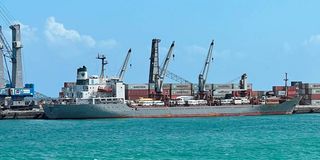
The Mogadishu Sea Port in Somalia. Recent reductions in aid budgets by major donors signal a new reality: developing countries must increasingly finance their own development.
The era of relying on Official Development Assistance (ODA) as a primary driver of development is changing rapidly. Whether temporary or permanent, recent reductions in aid budgets by major donors signal a new reality: developing countries must increasingly finance their own development. Rather than viewing these cuts solely as a crisis, governments should see them as a catalyst to strengthen domestic institutions, mobilise national resources and build more resilient economies.
According to the Organisation for Economic Co-operation and Development (OECD), major donors including the United States, the United Kingdom, Germany and France have reduced ODA commitments since 2024. These reductions come at a time when many developing countries continue to face growing fiscal pressures, debt burdens, climate shocks and increasing demand for public services. What was once regarded as a relatively predictable source of development finance is now becoming more constrained, competitive and increasingly influenced by geopolitical priorities.