Endangered mountain gorillas hold their own against deadly Ebola
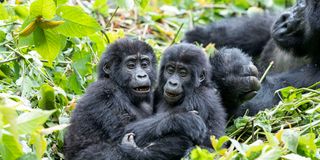
Mountain gorilla in a rainforest of the Bwindi Impenetrable National Park, Tropical Rainforest, Kanungu District, Central African Hills, Uganda. Scientists are calling for proactive measures at the human-wildlife interface for the mitigation of emerging infectious diseases and drivers leading to an increased risk of disease transmission from humans to wildlife and vice versa. PHOTO | SYLVAIN CORDIER | BIOSPHOTO VIA AFP
If infected with Ebola virus, less than 20 percent of endangered mountain gorillas living in Africa’s Virunga Massif region that straddles the Democratic Republic of the Congo (DRC), Rwanda, and Uganda would survive more than 100 days past the first confirmed case.
This is according to a new study in Scientific Reports simulating and projecting the impacts an Ebola virus outbreak would have among mountain gorilla populations living in the three countries. The Ebola virus is highly lethal for great apes. Estimated mortality rates up to 98 percent have reduced the global gorilla population by approximately one-third. There are just over 1,000 individuals remaining in the world.