Difficult conversations: Let’s talk about hate of ‘other’
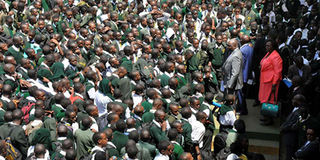
Jamhuri High School officials address the students at the assembly moments before the school was closed on January 24, 2018 following alleged religious animosity among the students which led to fighting. PHOTO | FARNCIS DERITU | NMG
A WhatsApp message doing the rounds lists topics students should learn but are not taught in schools. The list includes personal financial management, emotional intelligence and how to file tax returns. We could add what Teacher Momanyi, in his e-mail, challenged me to write about: How teachers could begin speaking with students on ethnic divisions and handling constructive civil discourse. He called it the “difficult conversation.” Teacher Momanyi asked two profound questions in his e-mail: How does a teacher, who comes from the same society as everyone else does, move beyond personal experience to find mutual understanding and see issues from the perspective represented by the diversity of experiences among students? how does a teacher process their own biases and represent neutrality on divisive and emotional issues? Here is what I think: The beginning of the term is appropriate for this conversation. Teachers have their hands full, given the vitriol from political leaders and acts of violence motivated by hate on the local, national and especially international stage.
The students look for and often don’t find models for constructive public political discourse on ethnic relations. This is a more difficult conversation than teaching the filing of tax returns.