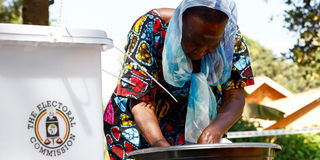
A woman marks a presidential ballot paper as she votes during the Uganda general election at a polling centre in Magere, Kasangati on January 15, 2026.
Uganda’s election is a regional stress test. In today’s East Africa, elections no longer end at the ballot box, they spill into trade corridors, diplomatic language, and the credibility of a bloc that still speaks of people-centred integration while practising executive-led stability.
The question, then, is not only who wins in Kampala. It is what the region has begun to normalise about how power is kept, and what costs that normalisation imposes on integration itself.