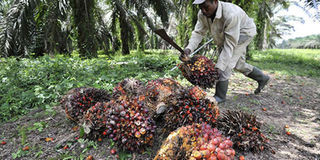
A labourer gathers freshly cut palm fruits to be used in making palm oil, at a plantation run by an Ivory Coast palm oil research center, in Alame, near Abidjan, on June 5, 2013. PHOTO | SIA KAMBOU | AFP
One of Nigeria’s thought leaders revealed at a convocation lecture a few years ago that his country spent about $7.4 billion on the importation of toothpicks, fish, milk, textiles, rice and furniture between 2014 and May 2015.
When a nation with wood imports furniture and toothpicks, a nation with oceans, lakes and rivers imports fish, a nation with cows imports milk, a country with most of its land untouched imports food that it can grow and when a nation has an abundance of rainfall at some seasons and yet suffers drought in other seasons, there is a problem.