Africa’s conflicts, Ebola outbreak halt children’s education
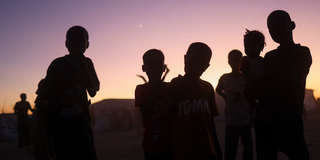
Sudanese refugee children from al-Fashir stand at sunset in the Tine transit camp amid the conflict between the paramilitary Rapid Support Forces (RSF) and the Sudanese Army, in eastern Chad, November 23, 2025.
Conflict and disease outbreaks such as Ebola have combined to limit schooling opportunities for children, especially in the Democratic Republic of Congo and Sudan, with experts warning an entire generation’s capacity could be stunted.The revelations emerged this week as Sudan’s military rulers signalled readiness to pursue a US-inspired peace bid, which has been elusive for the last two years.In Sudan’s North Kordofan state, children are facing growing threats to their education as drone attacks disrupt school classes, damage civilian infrastructure and undermine efforts to restore learning for thousands of children displaced by the country’s war. In El Obeid, the state capital, teachers are being forced to suspend lessons repeatedly because of drones flying overhead. The warnings are contained in a report by the Norwegian Refugee Council (NRC), an aid agency that has worked in conflict zones in the region.
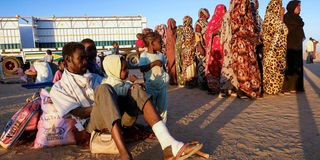
An injured man from Al-Fashir sits on the ground surrounded by his children, while displaced women wait in line to receive aid at a displacement camp in Al-Dabba, Sudan, November 19, 2025.
Photo credit: Reuters
In Sudan, these disruptions are adding to the challenges facing families who have fled fighting elsewhere in Sudan and are struggling to secure education for their children.The latest warning followed a visit to the city this week by Shashwat Saraf, the NRC’s country director in Sudan, who said children were being forced to make difficult choices in their pursuit of an education.“I visited a school where teachers told me they are being forced to regularly suspend lessons as a result of drones flying overhead,” Saraf said in a statement issued on Thursday. “It is an outrage that children should experience such things when simply trying to get education, they should not have to be brave just to attend school.”UN estimates say nearly half of the country’s population is displaced while damages on schools, roads, and other social centres have surpassed $2 billion.But if Sudan is counting the cost of destroyed social amenities, the Democratic Republic of Congo faces a repetitive problem. That is because many people have been displaced several times over to even think of restarting life, let alone schooling centres. About half of the displaced people, 6.5 million, are children, according to UN estimates. In eastern DRC, the epicentre of conflict, some 3.5 million are constantly on the move to dodge bullets. Last year, as war between the M23 rebels and government forces escalated, some 2600 schools were forced to close, putting nearly 130,000 children out of school.Eastern Congo’s three provinces: North and South Kivu, and Ituri are now also the epicentre of an Ebola outbreak, which has so far infected over 8,000 people and forced start-stop schooling in a region largely controlled by M23 rebels.Children are also paying a devastating price in the Ebola outbreak here because they face a higher risk of death from Ebola than adults and represent a significant proportion of those affected by the current outbreak. According to the Ebola Treatment Centre (ETC) in Butembo, an epidemiological research centre by medical charity group Doctors Without Borders (MSF), nearly one in four confirmed Ebola cases in North Kivu is a child.
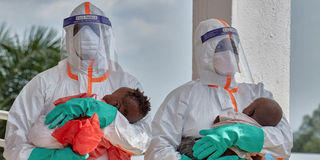
Congolese medical workers wearing personal protective equipment (PPE) carry children from Saint Nicholas Orphanage after they tested negative for Ebola in Bunia, Ituri Province, Democratic Republic of Congo, on June 9, 2026.
In North Kivu, children have been particularly affected by the current outbreak: MSF data showed nearly a quarter, 24 percent, of confirmed cases are among children under five years of age, compared with 13 percent in Ituri, while infants under one year old account for 13 percent of cases, compared with 6 percent in Ituri.MSF said it had observed, at the Butembo centre, that the case fatality rate among children was particularly high. Between June and September 2026, 24 out of 30 children, most of whom under the age of five, died from the Ebola Bundibugyo virus in this ETC alone. The rapid progression of the disease in communities and limited access to specialised care at health facility level are contributing to such alarming high fatality rates. “Primary health facilities often lack the specialised expertise, equipment, and infection prevention and control measures needed to identify and safely manage suspected cases,” explained Stéphanie Hoffmann, project coordinator for MSF in Butembo.“Most of the paediatric cases admitted in our ETC in Butembo, North Kivu, over the summer, had already been hospitalised for other illnesses in several facilities during the days or weeks before their admission. Their family members did not have Ebola themselves, and it is highly likely that these children contracted the disease inside healthcare facilities.”Healthcare responders say strengthening infection prevention and control (IPC) measures in health facilities, ensuring the availability of personal protective equipment (PPE), and reinforcing the training of healthcare workers in non-Ebola health centres across at-risk areas are critical to maintaining essential services while preventing healthcare-associated transmission. But that arrangement can be difficult to have when at war and in a poor economy.Porous bordersCongo’s early problems with Ebola were insecurity, lack of trust in government officials and now a clash of directives between rebels and the government which often saw restricted or delayed response.In Sudan, which has no Ebola case yet but is listed among countries at risk due to porous borders, the problem is mostly from the sky: where drones have become deadly cocktails.The Norwegian Refugee Council said the insecurity situation has threatened the availability of basic learning materials. In recent weeks, drones have repeatedly struck civilian locations in El Obeid, including a university dormitory, a shelter for displaced families and warehouses in Sheikan locality containing more than 330,000 textbooks, according to the NRC.“Each attack leaves families wondering what will be hit next,” Saraf said, adding that families who had already lost their homes were also facing rising prices and difficulties accessing basic services.The Alsalam Organisation for Rehabilitation and Development is one of the NRC-supported centres which have helped re-enroll some 5,500 children displaced from previous schools in this area.But the limited space means classes can be congested. And yet they aren’t immune from future attacks, creating uncertainty in school programmes.The risks facing children extend beyond school. In a separate incident reported by Unicef on October 1, a drone strike on the Al Mina Al Bari shelter for internally displaced people in El Obeid reportedly killed one boy and injured 12 other children, including five boys and seven girls. The attack highlighted the vulnerability of children who have already fled their homes in search of safety. “Children come to these places in the hope of safety and protection, but last night any sense of safety was shattered,” said Angela Kearney, Unicef’s representative in Sudan. “Attacks on the places children go for protection must stop. These children have nowhere else to go.”Unicef said more than 400 children have been killed or injured across Sudan between January and September 2026, with drone attacks accounting for a significant share of the casualties. The organisation has warned that attacks damaging homes, schools, health facilities, water systems and markets are further disrupting essential services for children and families affected by the conflict. This normally amounts to a war crime.In Sudan, however, both warring sides: the Sudan Armed Forces and the paramilitary Rapid Support Forces (RSF) have been found committing these kinds of atrocities and their leaders are sanctioned by both the US and UK governments.